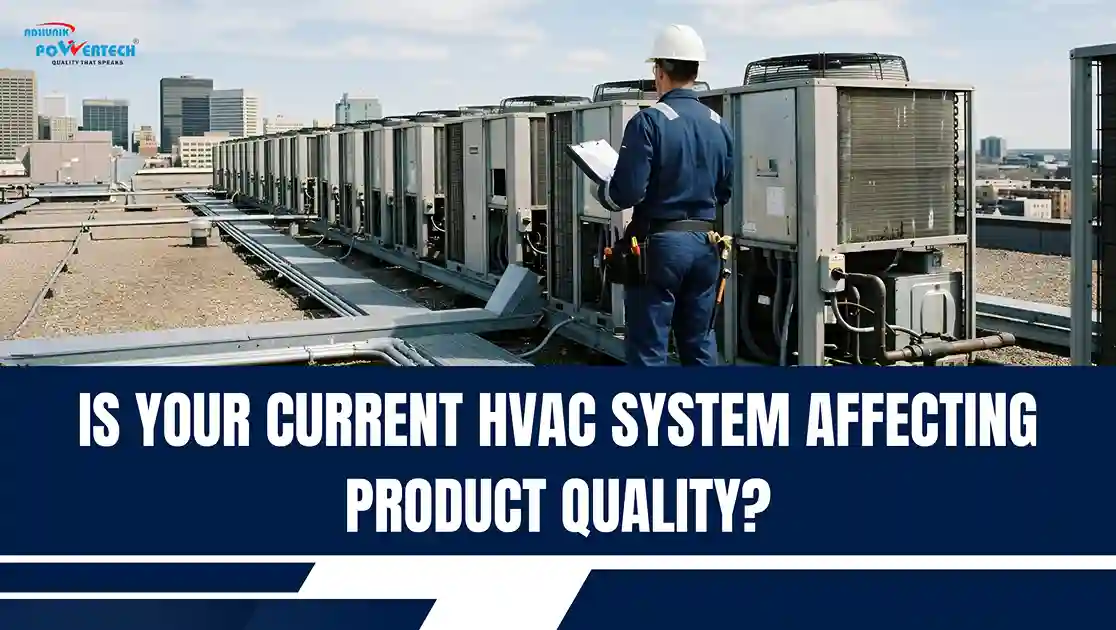
Is Your Current HVAC System Affecting Product Quality?
In many industries, product quality is often associated with raw materials, manufacturing processes, and quality control procedures. However, one critical factor is frequently overlooked—the performance of the HVAC system.
Could your current HVAC system be affecting product quality without you even realizing it? The answer, in many cases, is yes.
Why HVAC Systems Matter Beyond Comfort
Most people think of HVAC systems as equipment designed to keep buildings comfortable. In manufacturing and industrial facilities, however, HVAC systems perform a much larger role. They create and maintain environmental conditions that directly influence production outcomes.
For industries such as pharmaceuticals, food processing, electronics, automotive manufacturing, healthcare, and precision engineering, the indoor environment directly influences product consistency, safety, and compliance. Temperature fluctuations, humidity imbalance, poor air filtration, and inadequate ventilation can quietly affect production conditions and eventually compromise the final product.
Critical Parameters Under Control
A properly designed and maintained HVAC system helps eliminate minor parameter deviations that trigger significant quality issues, defects, waste, and customer complaints:
Temperature Stability
Different industries require highly controlled temperatures to ensure overall product stability and process reliability.
Humidity Levels
Managing moisture prevents absolute disasters like microbial growth, rust, or material cracking inside facilities.
Air Cleanliness & Filtration
Using efficient particulate filtration stops dust, micro-organisms, and airborne debris from contaminating processes.
The Hidden Connection
Many product defects are initially blamed on machinery, operators, or raw materials. In reality, environmental conditions often play a contributing role because problems develop gradually. An inefficient HVAC system can lead to:
- •Product Contamination: Dust, microbes, and process volatiles settling onto open materials.
- •Dimensional Inaccuracies: Expansion or contraction of sensitive materials due to thermal shifts.
- •Reduced Shelf Life: Accelerated degradation patterns in organic or compound-based products.
- •Increased Microbial Growth: Uncontrolled moisture spikes triggering unexpected biological hazards.
- •Material Degradation: Raw elements reacting unfavorably with extreme local conditions.
- •Inconsistent Production Batches: Varying end-results across identical operational lines and hours.
Temperature Variations & Consistency
Temperature control is one of the most critical aspects of production environments. An HVAC system that struggles to maintain stable conditions creates variations across sectors:
Improper temperatures can alter chemical compositions, reduce efficacy, or affect the stability of active ingredients.
Temperature fluctuations may accelerate spoilage, impact taste and texture, and shorten shelf life.
Excessive heat can affect sensitive components and increase operational failure rates significantly.
Even small temperature variations can lead to expansion or contraction of materials, causing dimensional inaccuracies.
Humidity & Air Quality Concerns
Humidity: The Silent Quality Influencer
Oversized or poorly designed HVAC systems often struggle to manage humidity effectively. Both extremes bring issues:
Poor Air Quality & Microscopic Risks
Dust, microbes, volatile particles, and airborne contaminants can easily enter production streams, resulting in dust settling on tablets, contaminated food packs, or surface defects in precision manufacturing.
Inadequate Ventilation & Pressure Imbalances can also destroy cleanroom integrity, leading to cross-contamination, recalls, and loss of brand reputation.
Signs Your HVAC System May Be Affecting Product Quality
Rising Product Rejection Rates
An unexplained increase in defects may indicate environmental instability.
Frequent Equipment Problems
Dust accumulation and poor temperature control can affect machinery performance.
Inconsistent Production Batches
Variations in product quality often correlate with fluctuating environmental conditions.
Increased Employee Complaints
Workers may report uncomfortable temperatures, excessive humidity, or poor air quality.
Condensation or Excess Moisture
Visible moisture may signal complex humidity control problems.
Unexpected Compliance Issues
Repeated audit findings related to environmental conditions should not be ignored.
The Financial Cost of Poor HVAC Performance
Product quality issues caused by environmental instability can become extremely expensive. Expenses stack up rapidly across product recalls, sudden production delays, increased batch waste, regulatory non-compliance penalties, higher equipment maintenance bills, and lost business opportunities.
How Modern HVAC Systems Support Better Product Quality
Advancements in HVAC technology have significantly improved environmental control capabilities, allowing smart HVAC systems to perfectly balance stability with long-term energy performance.
Real-Time Monitoring
Sensors continuously track temperature, humidity, and overall air quality metrics instantly.
Intelligent Controls
Automated real-time adjustments help maintain stable manufacturing conditions round-the-clock.
Energy Optimization
Advanced control systems improve efficiency while fully maintaining operational parameters.
Predictive Maintenance
Data-driven monitoring helps identify problems before they ever affect production outcomes.
Questions Every Facility Manager Should Ask
To determine whether your existing climate settings or setup might be quietly endangering batch consistency, evaluate these key points:
Conclusion: Quality Begins with the Right Environment
Product quality depends on far more than production equipment and quality control procedures. The environment in which products are manufactured plays an equally important role. An underperforming HVAC system can quietly contribute to contamination, inconsistencies, increased waste, and compliance risks.
Investing in proper environmental control through cleanroom management or scheduled preventive maintenance is not simply an operational decision—it is a proactive quality assurance strategy.
The real question is not whether HVAC affects product quality. The real question is: Is your current HVAC system helping you deliver consistent quality—or quietly putting it at risk?
Optimize Your Production Environment with Expert HVAC Solutions
Contact our specialized engineers to review your facility's cooling and compliance strategies today.