Pass Box vs Air Shower: What's the Difference?
In industries where cleanliness directly affects product quality and safety, contamination control is one of the most important parts of facility design. Pharmaceutical manufacturing plants, biotechnology laboratories, hospitals, medical device facilities, electronics production units, and research laboratories all rely on cleanrooms to maintain controlled environments.
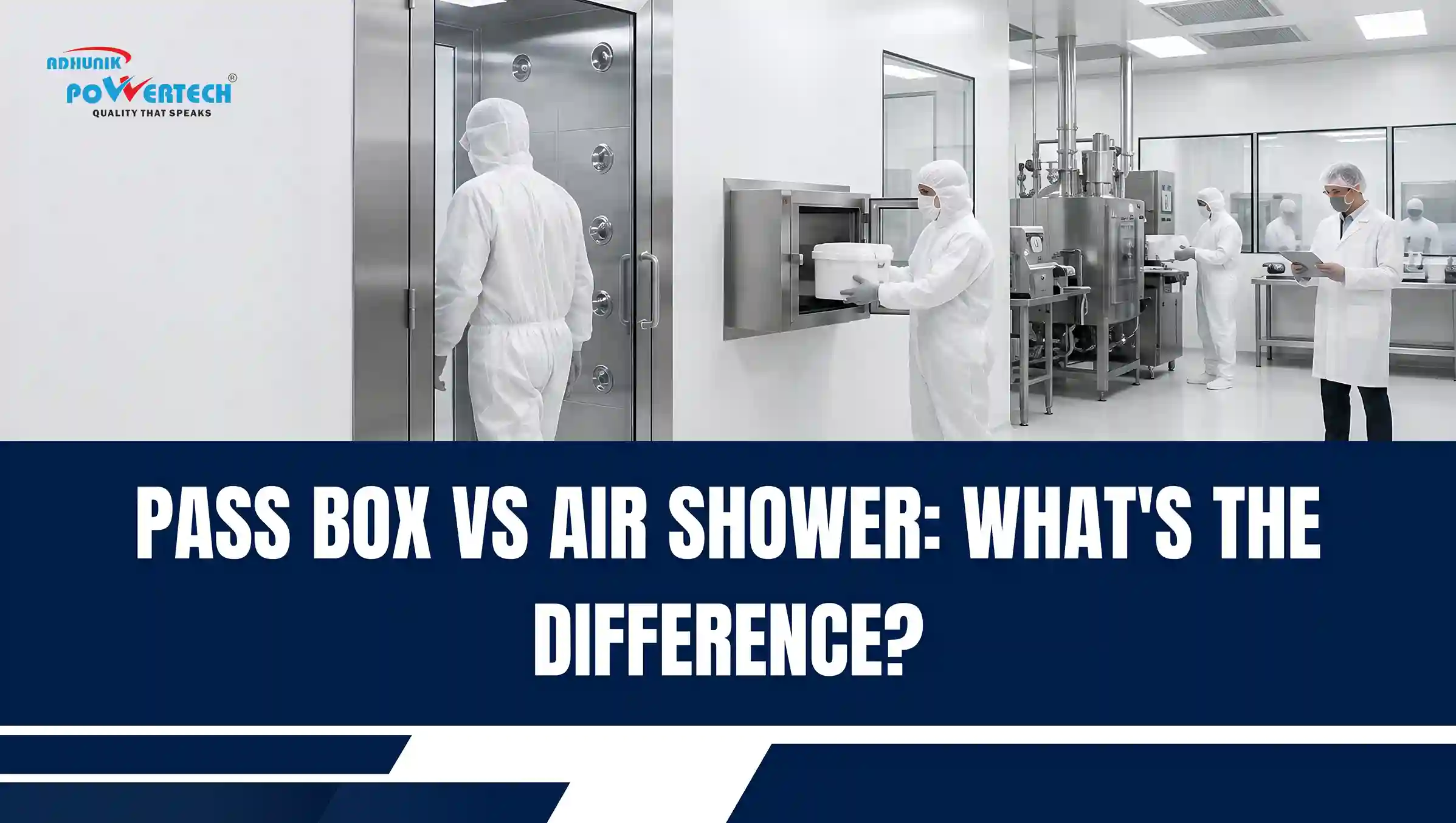
Cleanroom Contamination Control Equipment
Cleanroom cleanliness isn't only about HEPA filters and HVAC systems. People and material movement can introduce dust, microbes, fibers, and airborne particles, making contamination-control equipment essential. Understand the critical differences between Pass Boxes and Air Showers to choose the right contamination-control solution for your facility.
Why Are Pass Boxes and Air Showers Important in Cleanrooms?
Cleanrooms are designed to maintain a specific level of air cleanliness. Even a small amount of contamination can affect sensitive manufacturing processes or laboratory operations.
Common contamination sources include:
- Dust particles from outside environments.
- Fibers from clothing.
- Skin flakes and hair.
- Packaging materials.
- Equipment and tools entering production areas.
- Airborne microorganisms in critical environments.
Every entry point into a cleanroom is a potential contamination pathway. Instead of allowing unrestricted movement of people and materials, cleanroom facilities use dedicated equipment to minimize contamination risks.
A well-designed contamination-control strategy typically includes:
- HVAC systems with HEPA filtration.
- Pressure-controlled rooms.
- Airlocks and gowning areas.
- Pass Boxes for controlled material transfer.
- Air Showers for personnel decontamination.
Together, these systems help maintain cleanroom integrity and improve operational efficiency.
Basic Difference Between a Pass Box and an Air Shower
The biggest difference is the purpose they serve.
Pass Box = Material transfer
Air Shower = Personnel contamination control
Both help reduce contamination, but they protect cleanrooms in different ways.
What Is a Pass Box?
A Pass Box for cleanroom applications is an enclosed transfer chamber installed between two rooms with different cleanliness levels. It allows materials to pass from one side to the other without requiring personnel to enter both rooms.
Think of it as a secure transfer window designed specifically for contamination-sensitive environments.
Instead of opening a cleanroom door every time tools, samples, or packaging materials need to move, personnel place items inside the Pass Box. After one door closes, the opposite side opens only when it's safe to do so.
This simple process significantly reduces contamination risks.
What Is a Pass Box Used For?
A Pass Box is primarily used for transferring materials between controlled environments while maintaining cleanliness standards.
Typical materials transferred include:
- Raw materials for pharmaceutical production.
- Laboratory samples.
- Sterile packaging.
- Medical instruments.
- Documentation.
- Electronic components.
- Finished products.
Rather than increasing personnel traffic between rooms, a Pass Box creates a dedicated transfer point.
Common Industries That Use Pass Boxes
| Industry | Typical Use |
|---|---|
| Pharmaceutical Manufacturing | Transfer of sterile materials and packaging components. |
| Biotechnology | Sample movement between laboratories. |
| Healthcare | Sterile supply transfer in hospitals. |
| Medical Device Manufacturing | Controlled movement of components. |
| Electronics & Semiconductor | Dust-sensitive component transfer. |
| Food & Nutraceutical Manufacturing | Hygienic ingredient and packaging transfer. |
Types of Pass Boxes Used in Cleanrooms
Different cleanroom applications require different types of Pass Boxes.
A static Pass Box has no dedicated airflow system.
Best suited for:
- Areas with similar cleanliness classifications.
- Transfer of low-risk materials.
- Laboratories and packaging rooms.
Benefits include simple installation and low maintenance.
A dynamic Pass Box includes HEPA-filtered airflow inside the chamber.
Best suited for:
- Transfer between rooms with different cleanliness grades.
- Pharmaceutical manufacturing.
- Sterile production areas.
- Biotechnology facilities.
Continuous airflow helps remove airborne particles during transfer.
A UV Pass Box adds ultraviolet light for additional microbial surface disinfection.
Best suited for:
- Microbiology laboratories.
- Healthcare applications.
- Sensitive pharmaceutical operations.
UV systems are used as an additional contamination-control measure rather than replacing cleaning procedures.
What Is an Air Shower?
While a Pass Box handles materials, an Air Shower for cleanroom applications focuses on people.
An Air Shower is a self-contained chamber installed at the entrance of a cleanroom. Before personnel enter the controlled area, they pass through the chamber where high-velocity HEPA-filtered air removes dust, lint, fibers, and loose particles from clothing and exposed surfaces.
It acts as the final contamination-control step before entering the cleanroom.
Why Is an Air Shower Important?
People are one of the largest contamination sources inside cleanrooms.
Even after wearing cleanroom garments, personnel may carry:
- Dust particles.
- Hair.
- Skin flakes.
- Clothing fibers.
- External airborne contaminants.
- Particles attached to shoes or gloves.
Without proper decontamination, these particles can enter sensitive manufacturing or laboratory environments. An Air Shower helps reduce this contamination before entry.
Where Are Air Showers Used?
Air Showers are commonly installed at cleanroom entrances in industries where personnel contamination must be minimized.
| Industry | Typical Application |
|---|---|
| Pharmaceutical Manufacturing | Personnel entry before sterile production. |
| Biotechnology Laboratories | Controlled laboratory access. |
| Medical Device Manufacturing | Operator contamination control. |
| Hospitals & Healthcare | Entry into sterile preparation areas. |
| Semiconductor Manufacturing | Dust removal before production floors. |
| Food Processing Cleanrooms | Personnel hygiene before production areas. |
Air Showers are often installed after gowning rooms and before the cleanroom entrance.
Pass Box vs Air Shower: Key Differences Explained
Now that we've understood what each system does, let's compare Pass Box vs Air Shower side by side. While both are used for cleanroom contamination control, their design, purpose, and applications are very different.
| Feature | Pass Box | Air Shower |
|---|---|---|
| Primary purpose | Controlled transfer of materials between cleanroom areas. | Removal of dust and particles from personnel before entering a cleanroom. |
| Used for | Raw materials, samples, tools, packaging, and equipment. | Personnel wearing cleanroom garments. |
| Personnel movement | Not designed for personnel entry. | Specifically designed for personnel entry. |
| Material movement | Primary application. | Not intended for routine material transfer. |
| Installation location | Built into walls between controlled rooms. | Installed at cleanroom entrances or gowning exits. |
| Contamination-control method | Interlocked chamber with optional HEPA airflow or UV sterilization. | High-velocity HEPA-filtered air removes loose particles. |
| Door system | Mechanical or electromagnetic interlocking doors. | Automatic interlocked entry and exit doors. |
| Air filtration | Available in dynamic models only. | Essential component in every Air Shower system. |
| Space requirement | Compact wall-mounted installation. | Requires a dedicated entry chamber. |
| Main benefit | Maintains cleanliness during material transfer. | Reduces contamination carried by personnel. |
The Biggest Difference in Simple Words:
A Pass Box protects the cleanroom during material movement, while an Air Shower protects the cleanroom during personnel movement.
If materials enter frequently, a Pass Box becomes essential. If employees regularly enter controlled areas, an Air Shower becomes equally important.
Conclusion
Choosing the right contamination-control equipment is an important part of maintaining a clean and efficient cleanroom. Depending on your cleanroom requirements, using one or both systems can help maintain a controlled and reliable environment.
Frequently Asked Questions
Not Sure Which Cleanroom Solution You Need?
Contact us today to find the right cleanroom solution for your facility, workflow, and compliance needs.
Request a Free Consultation